Resene Popular Paint Systems – exterior timber: training notes
This web page is an edited version of the Resene Best System Selling training notes provided to Resene staff and is provided to enable you to gain a greater understanding of the substrates and paint systems you may encounter in your decorating project. It is impossible to cover all decorating scenarios in a single document, so if you are in doubt about any aspect of your project please contact Resene for assistance.
Select the timber surface you will be painting from the list below to view how to prepare and finish the surface.
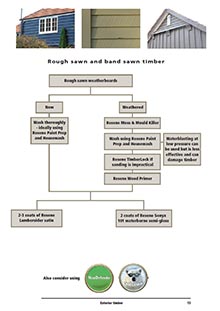
Preparation & finishing flowcharts
Note: Refer to the PDF flowchart for a visual of the steps below:
Rough sawn weatherboards
Preparation...
Topcoat options...
Also consider using: Mouldefender and CoolColour
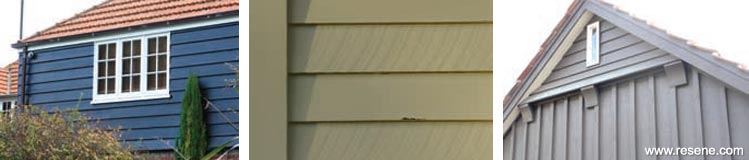
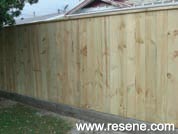
It is rare to find rough sawn timber used on new homes, however it was used extensively on older homes including many historic styles. Today you are most likely to see it used for fencing, sheds and pergolas.
Unpainted rough sawn timber will use 30-40% more paint than flat sawn (or smooth) board.
Given most rough sawn is used for fencing it is probably unrealistic to expect three coats (either three of Resene Lumbersider or Resene Quick Dry primer plus two of Resene Lumbersider) to be applied. Mostly two coats of Resene Lumbersider will suffice.
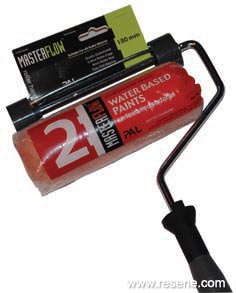
Depending on the profile rolling with a Long Reach or 180mm No. 2 (or No. 3) roller can be very effective.
Nails are usually left flush with the surface (as opposed to being punched and filled) and are simply painted over.
Old, grey and weathered rough sawn timber is not easily sanded so Resene TimberLock should be used in lieu of sanding before applying two coats of Resene Lumbersider.
As an alternative to Resene TimberLock and Resene Lumbersider for greyed rough sawn (or Resene Lumbersider for new timber) use Resene Woodsman after killing mould and washing clean.
Due to the rough profile we use Resene Lumbersider, which has the added benefit of being self priming, although Resene Sonyx 101 is also an option if a more cleanable surface is required – especially over old painted band sawn timber.
If repainting refer to flowcharts 2 and 3 for preparation advice.
 Get inspired ! Subscribe Get saving ! Apply for a DIY card

Can't find what you're looking for? Ask us!


Company profile | Terms | Privacy policy | Quality and environmental policy | Health and safety policy
Colours shown on this website are a representation only. Please refer to the actual paint or product sample. Resene colour charts, testpots and samples are available for ordering online. See measurements/conversions for more details on how electronic colour values are achieved.
What's new | Specifiers | Painters | DIYers | Artists | Kids | Sitemap | Home | TOP ⇧